
















Wood Slat Acoustic Panels: The Premium Solution for Office Noise Control
The World Health Organization (WHO) has long identified prolonged noise exposure as a significant contributor to stress, sleep disturbance, and cardiovascular issues. In the modern workplace—particularly open-plan offices—these health risks are amplified by continuous ambient noise, ringing phones, echoing conversations, and the clatter of keyboards and footsteps. In response, corporate real estate decision-makers are investing aggressively in acoustic remediation. Among the growing array of solutions, wood slat acoustic panels have emerged as the premium specification choice for Class A office developments in major metropolitan markets.
1. The Mechanism: How Wood Slats Control Office Acoustics
Wood slat acoustic panels address the complex noise challenges of open-plan offices through three complementary and scientifically validated mechanisms.
- Sound Diffusion Through Slat Geometry
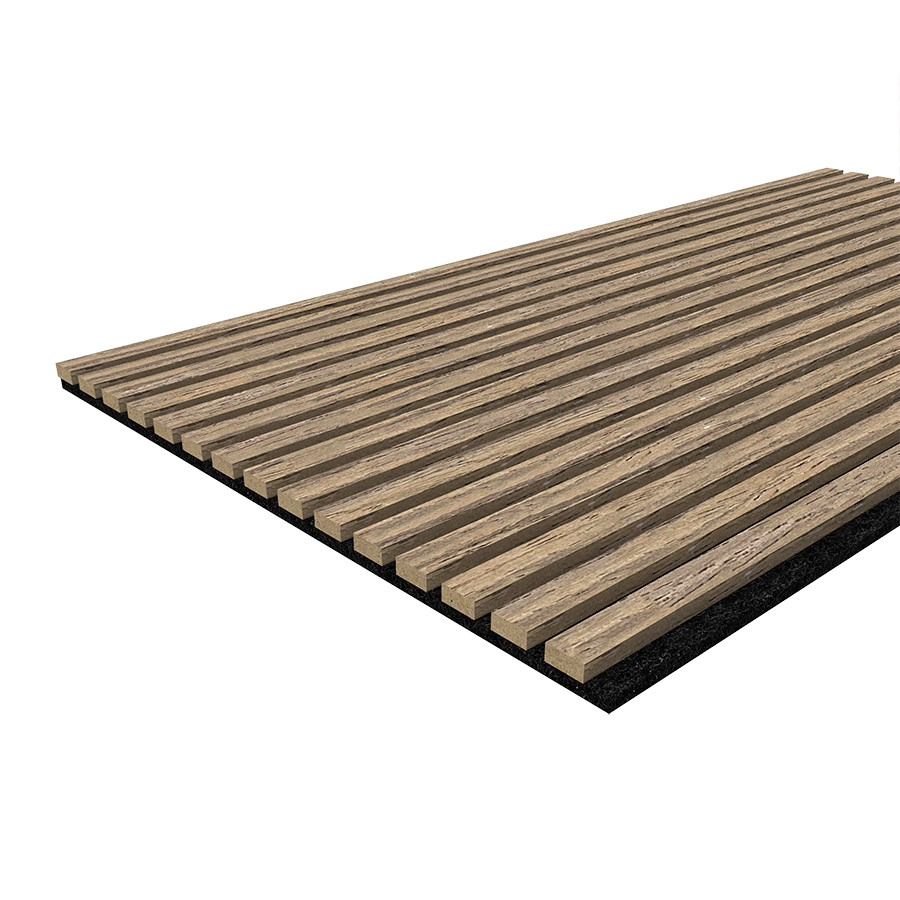
(Easy Install Acoustic Wall Panels Factory China) The physical design of wood slat panels plays a foundational role in acoustic management. The gaps between individual wood strips—typically ranging from 3 to 8 millimeters—are precisely engineered to break up and scatter incoming sound waves. Rather than allowing sound to bounce cleanly off hard surfaces (a phenomenon that creates flutter echoes and standing waves), the alternating slat-and-gap pattern disrupts coherent wavefronts. This diffusive action reduces echo by 50% or more compared to untreated drywall or glass partitions. In practice, designers can adjust slat width (typically 20–50 mm) and gap spacing to tune diffusion characteristics for specific room geometries and usage patterns.
- Absorption via High-Density Polyester Backing
While diffusion scatters sound, absorption removes acoustic energy from the environment. Premium wood slat panels incorporate a high-density polyester fiber (PET) backing layer, typically 6 to 12 millimeters thick, which acts as a porous absorber. When sound waves pass through the gaps between slats, they enter the fibrous matrix where friction converts acoustic energy into minute amounts of heat. Unlike rigid surfaces that reflect up to 99% of incident sound, these engineered backings absorb the majority of energy. Independent acoustic testing confirms that premium panels achieve Noise Reduction Coefficient (NRC) ratings of 0.85 to 0.94—meaning they absorb 85–94% of sound striking the surface, reflecting only a tiny fraction.
- Strategic Zoning Through Placement
Beyond material properties, the spatial arrangement of wood slat panels enables a sophisticated acoustic design strategy known as zoning. By varying panel coverage density, orientation, and mounting configuration, designers can define distinct auditory zones within a single open floorplate:
- Focus work zones: High-density coverage (70–80% of wall and ceiling surfaces) with narrow slat gaps (3–4 mm) to maximize absorption and minimize distraction.
- Collaborative discussion areas: Moderate coverage (40–50%) with wider gaps (6–8 mm) to support speech clarity while reducing cross-talk into adjacent zones.
- Private conversation nooks: Fully treated enclosures or pods with overlapping panel orientations (vertical and horizontal) to block sound transmission and ensure confidentiality.
This zoning capability transforms the open-plan office from a uniformly noisy environment into a thoughtfully layered acoustic landscape.
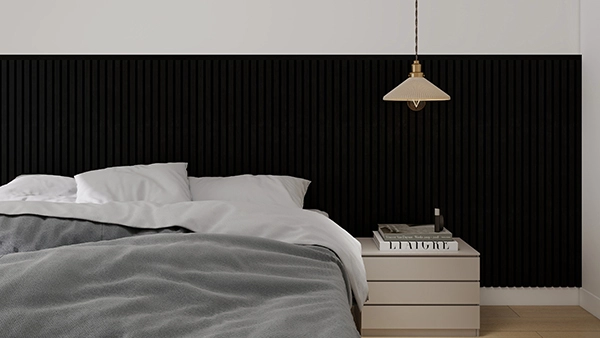
2. Beyond Acoustics: The Biophilic Advantage
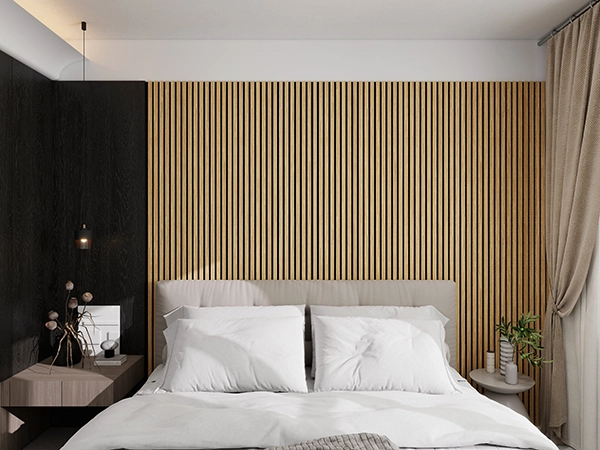
Unlike utilitarian acoustic foam (which often appears as colored wedges of porous material) or fabric-wrapped fiberglass panels (which convey a medical or institutional aesthetic), (Wood Soundproof Wall Panels Manufacturer China) wood slat systems deliver design integration that enhances brand perception, employee satisfaction, and workplace culture.
3. Customization and Brand Alignment
Modern manufacturers offer extensive finish options—from natural oak and walnut to ash, maple, cherry, and even brand-matched stains. Custom pigments allow panels to align precisely with corporate identity guidelines, functioning as architectural features rather than acoustic afterthoughts. Some systems integrate LED lighting strips within slat gaps, creating linear illumination that serves both wayfinding and ambient lighting functions. Others incorporate concealed mounting hardware so that finished walls present a seamless, furniture-grade appearance.

(Acoustic Panels Manufacturer China) With custom finishes, simple maintenance, and strong ROI, wood slat panels have rightfully become the premium specification choice for Class A office developments in global metropolitan hubs. For developers, architects, and facility managers seeking to future-proof their portfolios, wood slat acoustics represent an investment in health, productivity, and enduring architectural quality.